`n
Time is brain. Our rapid-response stroke protocol minimizes brain damage through immediate imaging, advanced intervention, and intensive monitoring - every minute of delay matters.
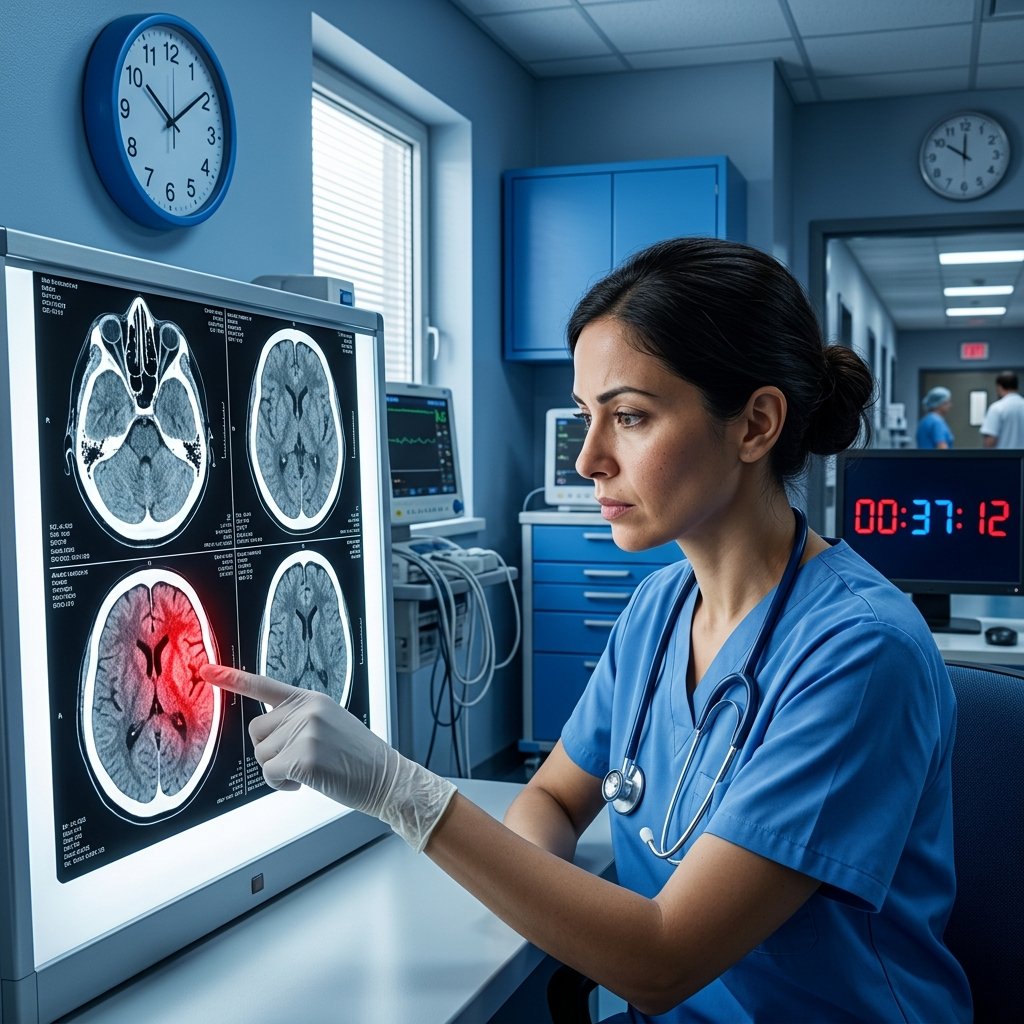
A stroke occurs when blood supply to part of the brain is suddenly cut off (ischemic stroke) or when a blood vessel in the brain ruptures (hemorrhagic stroke). Without oxygen, brain cells begin dying within minutes. Effective stroke management at Samarth Neuro & Superspeciality Hospital centers on rapid recognition, emergency imaging, and time-critical intervention - including intravenous thrombolysis (clot-busting drugs) for ischemic strokes and emergency neurosurgery for hemorrhagic strokes - followed by comprehensive neuro-rehabilitation to maximize functional recovery.
We educate patients and caregivers to recognize stroke using the BE-FAST acronym: Balance loss, Eyes (vision changes), Face drooping, Arm weakness, Speech difficulty, Time to call emergency.
On arrival, our stroke team immediately activates the emergency protocol - clinical assessment, vital signs, blood glucose, and emergency CT brain scan are completed within minutes.
Non-contrast CT scan differentiates ischemic from hemorrhagic stroke. CT angiography or MRI may be performed to identify the clot location or bleeding source.
For ischemic stroke, IV thrombolysis (tPA) can be administered within 4.5 hours of symptom onset. For hemorrhagic stroke, emergency neurosurgical evacuation may be life-saving.
After initial treatment, patients are monitored in our Neuro-ICU/stroke unit for BP control, cardiac monitoring, and early detection of complications.
Rehabilitation begins within 24-48 hours of stabilization, including physiotherapy, speech therapy, and occupational therapy to maximize functional recovery.
If you or a loved one experience any of the following, seek medical attention immediately:
Our emergency imaging protocol ensures patients get a CT brain scan within 20 minutes of arrival - a critical benchmark in stroke care.
We are equipped to administer IV tPA (clot-busting therapy) to eligible ischemic stroke patients within the therapeutic window.
For hemorrhagic strokes requiring surgical evacuation, Dr. Patil's emergency neurosurgical team is available around the clock.
Our Neuro-ICU functions as a dedicated stroke monitoring unit with continuous cardiac telemetry and neurological assessments.
Our rehabilitation team initiates physiotherapy, speech therapy, and occupational therapy within 48 hours of stroke stabilization.
Call +91 73786 12600 at any hour. Our team is ready to guide you through a stroke emergency over the phone while the patient is transported.
FAST stands for: Face drooping (ask the person to smile - is one side drooping?), Arm weakness (can they raise both arms?), Speech difficulty (is speech slurred or strange?), Time to call 112/emergency. Act on any one of these signs immediately.
Yes - ischemic stroke can often be treated very effectively with clot-busting drugs (thrombolysis) if given within 4.5 hours of symptom onset. Hemorrhagic stroke may require surgery. The key is acting FAST.
Recovery depends on the size and location of the stroke and how quickly treatment was received. Many patients achieve significant functional recovery with dedicated rehabilitation. Early intervention dramatically improves outcomes.
Key risk factors include hypertension, diabetes, high cholesterol, heart disease (atrial fibrillation), obesity, smoking, and alcohol. Managing these conditions significantly reduces stroke risk.
Our expert team is available 24/7 for emergencies and Monday-Saturday 9AM-8PM for consultations.